Let's Do This: Report on Special Election Results in Minnesota and Iowa
The miracle didn't happen in Minnesota, but Iowa looks increasingly ripe for 2026

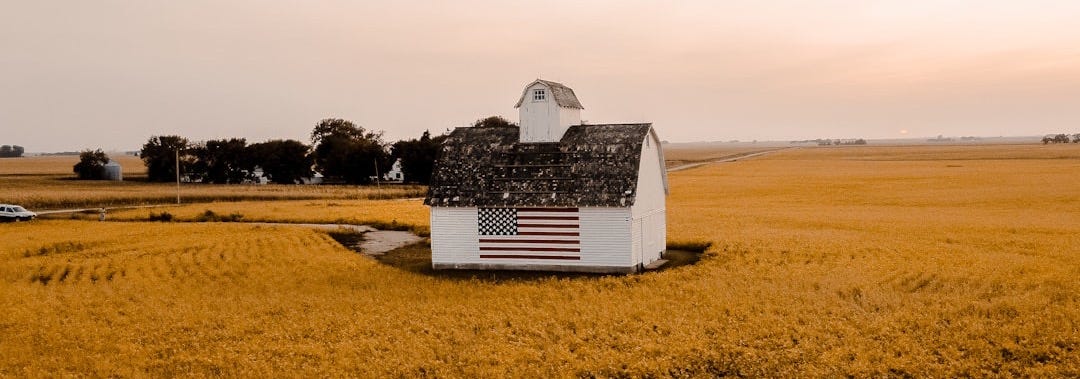
On Tuesday April 29 there were two special elections for vacant state legislative seats: one in the 6th state Senate district of Minnesota, and one in the 78th House district of Iowa.
In the Minnesota race, which I promoted and fundraised for quite heavily both here on Wolves and Sheep and over its associated email activism list, Bowers News Media, Denise Slipy, the Democratic-Farmer-Labor candidate, lost by roughly 20 points in a district that Donald Trump had won by 27 points back in November. While Slipy's performance was a clear improvement from the Democratic performance in 2024, it nowhere close enough to win the district.
In the Iowa race, the Democratic candidate rather stunningly improved on Kamala Harris's November 2024 margin by 26 points, changing a district that was 66%-33% Democratic last year to 79%-21% Democratic this year. That was the kind of swing we had needed to make the Minnesota seat competitive, but it came next door in Iowa. Notably, this is also now the third state legislative special election held in Iowa in 2026, and all three swings have been enormous for Democrats: 25, 22 and 26 points.
(Note: You can see the results for all special elections in 2025 here, courtesy of The Downballot. Rounding accounts for any small discrepancies you might notice in the numbers.)
First, let me own up to what happened: my predictions for the Minnesota seat were way off. Even though I never wrote this down, in my head I had expected a minimum pro-Democratic swing of 16 points, based on the 16-point swing for Democrats in the state Supreme Court race of a demographically similar area of neighboring Wisconsin. While I had figured that this red district in Minnesota would be basically the same as its Wisconsin and Iowa neighbors, clearly I was wrong. Whatever is happening in Iowa, it does not seem to be happening in Minnesota, or at least not happening to the same degree.
Second, I want to thank everyone who donated to Denise Slipy's campaign. The tens of thousands of dollars we raised for her were likely a pretty significant percentage of her overall fundraising. I really appreciate you putting your faith both in me and in Slipy.
Third, I don't regret going all-in for Slipy. Had she pulled off the upset, it would have sent shockwaves with real political consequences around the country. Even taking a chance on pulling off something like that for about $20,000 is a pretty good bet to take in contemporary politics, given that every two-year election cycle now costs something like $10 billion. Even though I don't play the lottery, perhaps this was akin to buying a lottery ticket: low risk and very low chance of success, but a potentially high reward.
Fourth, I have to say wow to those Iowa results! There is clearly something happening in the Hawkeye state. One 20-point plus Democratic swing could be a fluke. Two 20-point plus Democratic swings could be a coincidence. Three 20-point plus Democratic swings, however, make a pattern.
Republican Sen. Joni Ernst won re-election by 6.59% in 2020, and is up for re-election in 2026. While winning Iowa might at first seem like something of a longshot for Democrats, given the enormity of the swings we have seen in Iowa special elections so far, it is getting easier to believe that this is a seat we can really flip. If so, as I have argued in two recent articles here on Wolves and Sheep, there really is a path toward Democrats retaking the U.S. Senate in 2026:
Another Huge Special Election Result for Democrats in Iowa Changes the 2026 Electoral Landscape (March 14)
For those of you without the time to click through and read those two articles, in short the path for Democrats winning the Senate next year requires three steps:
Defending all Democratic-held Senate seats, which should be totally doable in the current electoral environment. Sen. Jon Ossoff's seat in Georgia is likely the only one in any danger of flipping to Republicans.
Defeating Republican Sen. Thom Tillis in North Carolina, which also should be eminently doable in the current political environment.
Winning three out of the five long shot (but not impossible) states of Alaska, Iowa, Maine, Ohio and Texas.
To pull this off, we need a similar political environment to 2006 or 2018, when Democrats had a roughly 8 or 9 point advantage nationally. We will also need above-average Democratic candidates in the five long shot states, such as former Sen. Sherrod Brown in Ohio, former Rep. Colin Allred in Texas, and former Rep. Mary Peltola in Alaska.
Difficult? Yes. Impossible? Certainly not. Results from the Wisconsin state Supreme Court election in April, and results from special elections so far in 2025, indicate that we are already in a political environment that favors Democrats by about 8 or 9 points nationally. As Matt's recent writing has argued, over the next 18 months the national tilt might well slant even further toward Democrats. With candidates of comparable quality to the ones I already listed, that would be enough for Democrats to flip control of the U.S. Senate in 2026.
To help with this effort, I have put together an Act Blue page where you can donate to whoever the eventual Democratic nominee will be in five of the six target states I listed in this article: Alaska, Iowa, Maine, North Carolina, and Texas (I can't find a Democratic nominee fund for Ohio yet, but I will add it as soon as I do). Whatever funds you donate will be held in escrow and transferred to the campaigns of whoever wins the Democratic primary in those states next year. This way, you can donate directly to the Democratic campaigns in the seats we need to win back the Senate in 2026 without having to wait for the Democratic primary to take place, or even for any Democratic candidates to announce they are running.


