

We Are at Another Inflection Point

Donald Trump’s presidency is in trouble.
Trump has been steadily losing the support of the public since the first chaotic days of his second presidency. As his support declines he becomes more reckless and dangerous. And as he becomes more reckless and dangerous he loses more support—making him even more reckless and dangerous while threatening the viability of his presidency and his party.
Unburdened by aides who will check his worst impulses, Trump has perfected the role of toddler-in-chief, demanding to get his way and acting out when he does not.
We have seen this dynamic so many times that we can document it as a pattern.
Trump acts impulsively. His job approval sinks as people express their displeasure. To change the subject and assert his dominance, he deflects with another impulsive action that is more outrageous than the one people rejected. This escalation is met with more public displeasure, and his job approval sinks further.
So he deflects and escalates again.
Venezuela deflected attention from his failure to release the Epstein files.
Greenland deflected attention from Venezuela.
Minnesota deflected attention from Greenland.
Meanwhile, the Epstein files are still out there.
After Trump was humiliated in front of the world and forced to retreat from his demand to obtain Greenland, it became inevitable that he would redirect attention to something even more monstrous.
He lashed out in Minnesota, where Americans are being executed by government agents for peacefully exercising their constitutional rights and then branded domestic terrorists by an administration engaged in domestic terrorism.
We were—sadly and tragically—destined to get here. Perpetually accelerating outrage makes tragedy inevitable.
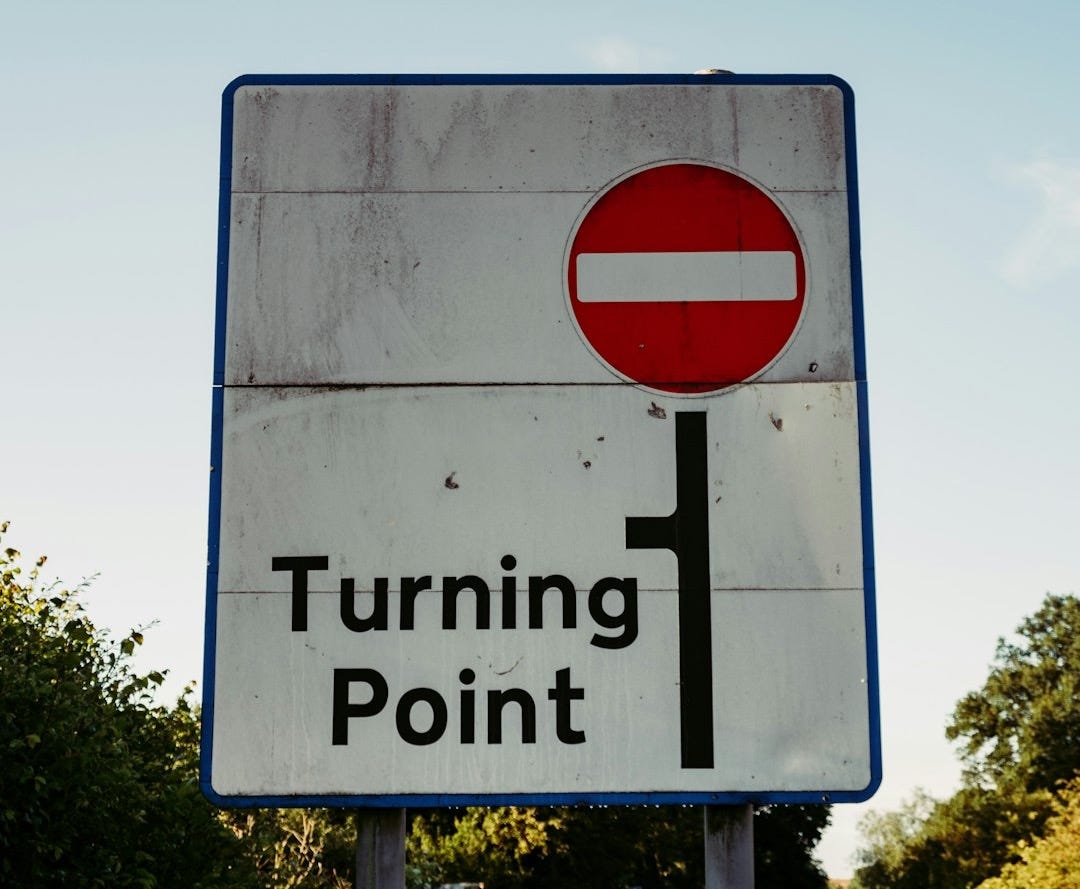
The question I want to raise today is whether the murders of Renee Good and Alex Pretti represent a turning point for the Trump presidency.
As frightening and dangerous as this moment is and as threatening as it is to democracy, it also has the potential to galvanize and broaden the pro-democracy movement as more people begin to fear a government they expect to protect them—and take action.
As the pro-democracy movement grows larger and stronger, Donald Trump finds himself increasingly isolated from the country he was hired to lead.
This loss of public support was unlikely to happen at once. Remember, it was just over a year ago that Trump was elected with the votes of slightly less than half the electorate. It takes time for people to change their minds. His support was always likely to disappear in stages.
We should expect the path to Trump’s repudiation to be marked by inflection points—moments when public opinion galvanized around a specific atrocity and the administration’s political situation qualitatively changed for the worse.
We could be living through one now.
While my case is admittedly subjective, I would argue that last week marked the second turning point of Trump’s second presidency.
In slightly over one year, Trump’s experiment with reactionary governance has moved through three phases—aggression, weakness, and delegitimization.
